
A 10-part series on midlife skin
The Skin Shift
Your skin changes through perimenopause and menopause. Your skincare can change with it.
Clear answers about dryness, lines, dark spots, sensitivity, hair and more. One new guide every Friday.
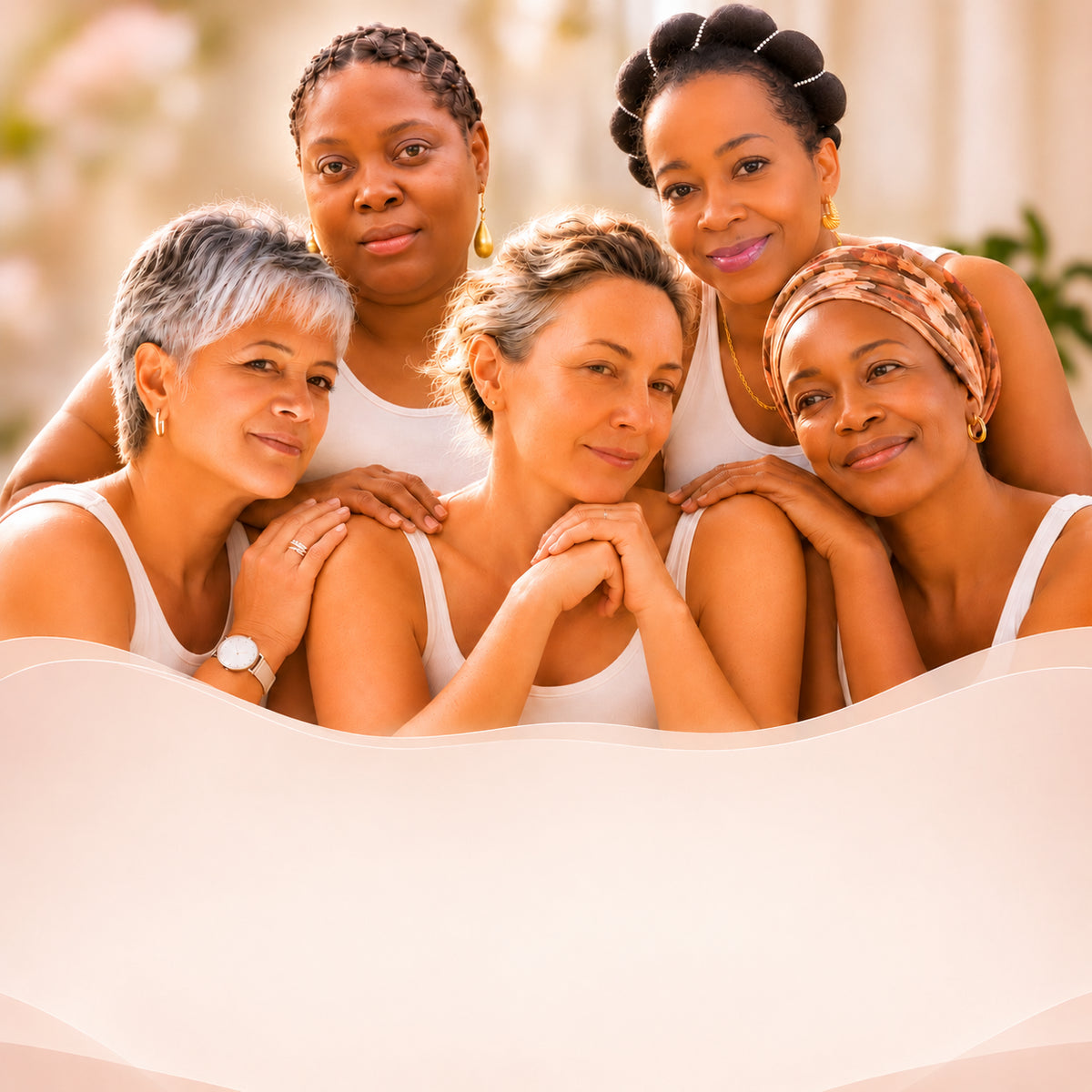
Maybe your moisturizer stopped working. Maybe a serum you loved for years suddenly stings. Maybe you just don't recognize your skin the way you used to.
You are not imagining it, and nothing is wrong with you. Your skin is shifting. This series explains why, and what actually helps.
What's changing
Why your skin feels different now
These changes can show up on every skin type and skin tone, in women of every ethnicity.
Estrogen drops
Estrogen helps skin hold water and make collagen. As levels fall, many women notice skin feels drier and thinner.
Collagen declines
Studies suggest skin loses a meaningful share of its collagen in the first years after menopause, so lines and laxity can show up faster.
The barrier weakens
A drier, thinner barrier lets moisture escape and irritants in, which is why products you have used for years may suddenly sting.
Start with your concern
What are you noticing?
Pick the change that bothers you most. Each one has its own guide.
Dryness
My face feels tight and dry
Even right after moisturizing.
Read the guide →LinesMy wrinkles look deeper
Lines and softness seem to appear faster.
Read the guide →ToneI'm getting more dark spots
Uneven tone and spots that are slow to fade.
Read the guide →SensitivityMy skin reacts to everything
Stinging or redness from products I used to love.
Read the guide →HairMy hair feels thinner
More shedding and a scalp that feels different.
Read the guide →EyesMy eyes look tired
Puffiness and fine lines, even after sleep.
Read the guide →The series
Ten parts, one new each Friday
A new guide every Friday from November 20 through January 22. Parts that aren't out yet show their release date.
01
Read now →
Your Moisturizer Didn't Stop Working. Your Skin May Have Changed.
Why the products you trusted can feel different in midlife, and what is changing underneath.
02
Coming November 27
Why Does My Face Feel Dry Even After I Moisturize?
How lower estrogen affects moisture, and how to layer hydration so it lasts.
03
Coming December 4
Why Do My Wrinkles Suddenly Look More Noticeable After 45?
Collagen, firmness and the gentle habits that support smoother-looking skin.
04
Coming December 11
Why Am I Getting More Dark Spots During Menopause?
Why uneven tone can show up now, and gentle ways to help it look more even.
05
Coming December 18
Why Does My Skin Suddenly React to Products I've Used for Years?
Sensitivity in midlife skin, and how to calm and simplify your routine.
06
Coming December 24
Is Menopause Making My Hair Thinner?
What may be behind thinning hair, and how to care for your scalp.
07
Coming December 31
Why Do My Eyes Look Tired Even After a Good Night's Sleep?
Puffiness, fine lines and dark circles around delicate eye skin.
08
Coming January 8
Why Is My Body Skin Getting So Dry and Itchy During Menopause?
Comfort for dry, itchy body skin, from the shower to bedtime.
09
Coming January 15
Do I Still Need Retinol, Vitamin C, and Peptides After 50?
How to keep the actives you trust, used in a gentler way.
10
Coming January 22
Your Skin Is Changing. That Doesn't Mean You Need to Start Over.
Bringing it all together in a simple routine for changing skin.
The science, simply
What is actually happening in your skin?
Estrogen supports the cells that make collagen, elastin and the natural oils and moisture-binding molecules that keep skin comfortable. When estrogen falls during perimenopause and menopause, skin can make less of all of them.
The result is often skin that loses water faster, repairs more slowly and reacts more easily. That is why the routine that worked at 35 may not work at 50.
The good news: skin still responds to good care at every age. Gentle cleansing, layered hydration, a barrier-supporting moisturizer, well-chosen actives and daily sunscreen can make a real difference in how skin looks and feels.
Questions women ask
Menopause skin: frequently asked questions
What does menopause do to your skin?
Falling estrogen can leave skin drier, thinner and more sensitive, with less collagen and slower repair. Many women notice more lines, dark spots, dullness and reactions to products they used to tolerate.
When do skin changes start in perimenopause?
Many women notice changes in their 40s, during perimenopause, often years before their last period. Dryness and sensitivity are common early signs.
Do I need a new skincare routine for menopause?
Usually not a brand-new one. Most women do best by simplifying, adding more moisture, using gentler actives and wearing sunscreen every day.
What ingredients help menopausal skin?
Humectants like glycerin and hyaluronic acid, barrier-supporting moisturizers, peptides, vitamin C and carefully used retinoids are all well studied for changing skin. Daily broad-spectrum sunscreen matters most.
Is this series medical advice?
No. The Skin Shift is skincare education. Talk with your doctor about menopause symptoms, treatment options and any skin change that is painful, sudden or not improving.
A note from the founder
I created THEOBION because I kept seeing women told that midlife skin was something to fix or hide. It isn't. Your skin is changing, and it deserves care that makes sense for who you are now: gentle, effective and simple.
The Skin Shift is the guide I wish every woman had.
Dr. Oby, MD, Founder, THEOBION
Get the series by email
Come along for The Skin Shift
Get every part of the 10-part series in your inbox, one each Friday. Simple explanations, practical routines and ingredient science, written by a physician.
By signing up, you agree to receive The Skin Shift and other emails from THEOBION. Unsubscribe anytime. See our Privacy Policy.
Keep exploring
More from THEOBION
Skin Beyond Treatment
Our 10-part series for skin and hair changes during and after cancer treatment.
Explore the series →Barrier Cushion Peptide Cream
The rich, fragrance-free peptide cream at the center of many Skin Shift routines.
Shop now →The THEOBION Journal
More skincare guides, ingredient explainers and routines.
Read the journal →The Skin Shift is skincare education, not medical advice. Talk with your doctor about menopause symptoms, treatment options and any skin change that is new, painful or not improving.